
HLTH USA 2026
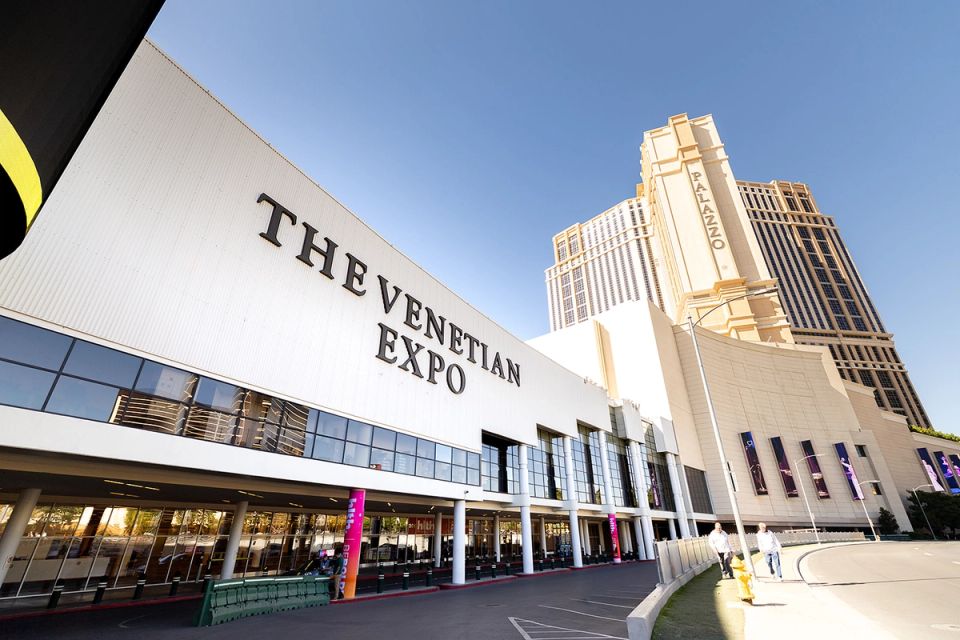
HLTH USA 2026 runs November 15-18, 2026 at The Venetian Expo in Las Vegas, Nevada. It bills itself as "Healthcare's #1 Innovation Event," and the scale backs the claim. Last year's event drew more than 12,250 attendees, 4,400 C-suite executives, and 950 sponsors and exhibitors across four days. If you work anywhere in digital health, health systems, payers, pharma, health IT, or healthcare investing, this is one of the few weeks a year where the whole industry is in one building.
This guide covers what you actually need to know before you commit budget: the dates and venue, who should go, the agenda and program structure, the full pricing ladder, hotels and travel, practical tips for surviving the Venetian, and, for the operations and reporting teams inside health-tech organizations, where a tool like Rollstack fits once you're back home turning all of that momentum into recurring reports.
TL;DR
- HLTH USA 2026 is the largest US gathering for healthcare and health-tech leaders, organized by HLTH and built around AI, care delivery, investment, and policy.
- The basics: November 15-18, 2026, The Venetian Expo, Las Vegas. Four days of main-stage keynotes, parallel insights programs, an AI Zone, a 950+ exhibitor floor, curated 1:1 meetings, the Startup Pitch Competition, and nightly receptions. On-demand recordings are included with registration.
- Pricing: tiered by who you are. Passes for clinicians, startups, and government and nonprofit attendees start at $1,500. Executive, investor, and vendor passes cost more, and some rates rise in steps as the event gets closer, up to full rates of $3,395 for most attendee types and $3,995 for solution providers and vendors. Market Connect and Media passes can be free with approval.
- The full agenda and speaker lineup are published, with content areas spanning AI and emerging technology, care delivery, pharma and life sciences, women's health, employer health, diagnostics, investors, and government and policy. Main-stage speakers include Arianna Huffington, OpenAI's Ashley Alexander, Anthropic's Dr. Syed Mohiuddin, and AARP CEO Dr. Myechia Minter-Jordan.
- For the operations, finance, and customer-facing teams inside health-tech and digital-health organizations, Rollstack automates the recurring board, investor, and partner reporting that sits downstream of your BI tools, connecting them to slide and document templates that refresh on schedule.
HLTH USA 2026: The Basics
- Dates: November 15-18, 2026 (Sunday through Wednesday)
- Venue: The Venetian Expo, 3355 S Las Vegas Blvd, Las Vegas, NV 89109
- Location: Las Vegas, Nevada
- Format: In-person, with on-demand access to session recordings included after the event
- Pricing: From $1,500 for clinicians, startups, and government and nonprofit attendees. Other rates rise as the event gets closer.
- Full rates: $3,395 for most attendee types; $3,995 for solution providers and vendors
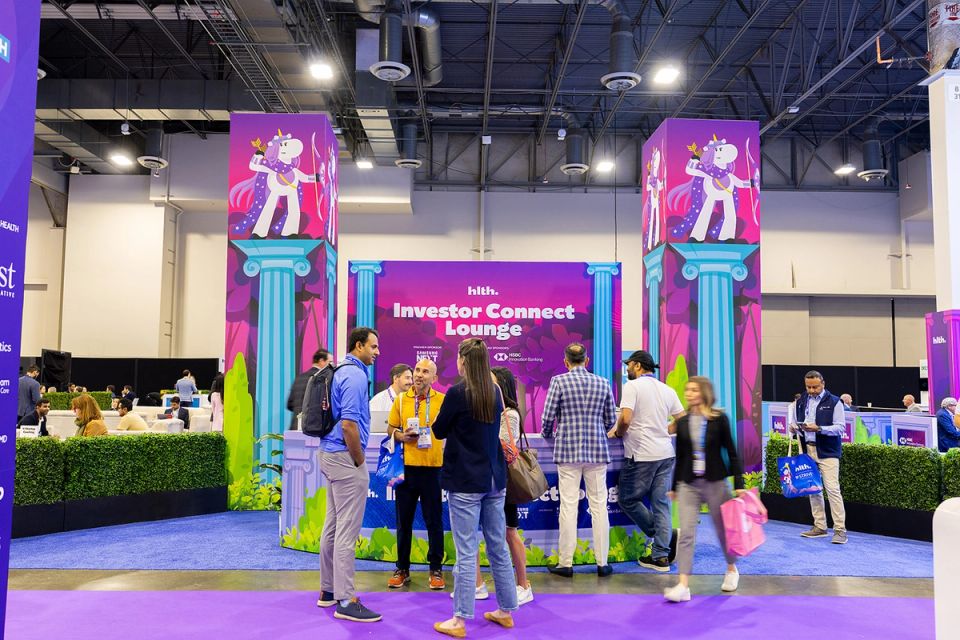
- Networking: Market Connect and Investor Connect curated 1:1 meetings; Attendee Meetup
- Best for: Digital-health founders and operators, payer/provider/employer executives, healthcare investors, pharma and life-sciences leaders, health IT, and the ops/finance/CS teams that support them
The all-access pass covers more than session entry: daily breakfast and lunch, evening receptions, the event app, exhibit floor access, wellness activities, fast-track badge pickup, discounted hotel and travel rates, and on-demand recordings afterward. Register and check the latest at the official page: hlth.com/events/usa.
What is HLTH?
HLTH (stylized in capitals, pronounced "health") is the company behind the HLTH USA event, along with HLTH Europe and, in partnership with CHIME, the ViVE conference. HLTH USA launched in 2018 and grew quickly into the headline gathering for the business of healthcare innovation. It is less a clinical-medicine conference and more an industry summit: the people in the room are running digital-health companies, leading health systems and payers, allocating venture and growth capital, and setting policy.
The through-line every year is where healthcare is going next, with AI now dominating that conversation, alongside care-delivery models, pharma and life sciences, women's health, employer benefits, and the investment and policy environment that shapes all of it. The format pairs big main-stage keynotes with smaller parallel tracks, a large exhibit floor, and a heavy emphasis on curated networking through programs like Market Connect and Investor Connect.
For the teams inside these organizations, HLTH is where deals start and narratives get set. The harder part is everything that happens afterward, when those same organizations have to prove traction, board after board and quarter after quarter. That reporting almost always starts in a BI tool and ends, by hand, in a slide deck. That is the gap Rollstack closes, and we'll come back to it below.
Who should attend HLTH USA 2026?
HLTH is broad on purpose. The value is the cross-section of healthcare in one place. It is most worth prioritizing if you are:
- Digital-health founders and operators raising, selling, or scaling, who need to meet buyers, investors, and partners in a compressed window.
- Payer, provider, and health-system executives evaluating new vendors, care models, and AI tooling, and benchmarking against peers.
- Healthcare investors (venture, growth, private equity) sourcing deals and tracking where the category is heading. Investor Connect is built for you.
- Pharma and life-sciences leaders working on commercial, digital, and partnership strategy.
- Employer and benefits leaders rethinking workforce health and the vendor stack behind it.
- Health IT, data, and analytics teams inside any of the above, who own the dashboards and the reporting that leadership and customers actually read.
- Solution providers and vendors selling into healthcare, who want floor presence and curated buyer meetings.
If you're an individual clinician looking primarily for CME-style clinical education, HLTH is not that. It's an industry and innovation event. Clinicians attend, and there's a discounted clinician pass, but the program is about the business and technology of care, not bedside practice.
HLTH USA 2026 agenda overview
HLTH has published both the agenda at a glance and the full session agenda, and the smart way to plan is by content area rather than by counting sessions. The program runs across main-stage keynotes, parallel insights programs, the AI Zone, an Insights Stage, a Wednesday Health Tech Summit, and the networking meetings that run throughout. Here are the areas to prioritize.
AI & Emerging Technology
Best for almost everyone this year, and especially product, data, and clinical-ops leaders. The AI Zone runs its own sessions Monday, Tuesday, and Wednesday morning. Prioritize this if your roadmap or your board is asking what's real versus hype in healthcare AI.
Care Delivery
Best for providers, health systems, and care-model innovators. Prioritize if you're rethinking how and where care happens, from virtual-first to in-home to retail.
Pharma & Life Sciences
Best for commercial, digital, and partnership leaders in pharma and biotech. The Pharma & Life Sciences Zone anchors this on the floor, with a dedicated insights program.
Women's Health
Best for founders, investors, and clinicians focused on women's health. A dedicated area on the floor plus programming reflects how much capital and attention this category has drawn.
Employer & Workforce Health
Best for benefits leaders and the vendors serving them. Prioritize if you buy or sell into employer health, with the Employer Solutions Area and a Payer/Employer insights track.
Investors, Government & Policy
Best for investors, policy leaders, and anyone whose business depends on reimbursement and regulation. Investor Connect runs curated meetings; policy programming covers the federal and state environment.
Specialty areas and pavilions
The floor is organized into zones worth routing through deliberately: AI Zone, AgeTech Central, the Diagnostics Area, the Nurse Innovators Pavilion, the Oral & Systemic Health Pavilion, and the Startup Zone. Wednesday morning closes the event with the Future, Future, Future of Health Tech Summit, partner specialty workshops, and the Startup Pitch Competition finale.
Session times and rooms are on the full agenda, and you can build your schedule in the event app, which opens about two weeks before the event.
Speakers to watch at HLTH USA 2026
HLTH has published its 2026 lineup at hlth.com/events/usa/speakers. Main-stage names include:
- Arianna Huffington, Founder and CEO of Thrive Global, on obesity science, GLP-1s and healthy habits (Monday)
- Ashley Alexander, VP of Product, Health at OpenAI (Monday)
- Dr. Myechia Minter-Jordan, CEO of AARP, on the 50-plus health consumer (Monday)
- Dr. Syed Mohiuddin, Head of Healthcare at Anthropic, on four years of generative AI in healthcare (Monday)
- Mandy Cohen, MD, Dr. Ezekiel J. Emanuel and Brian Blase in The Health Policy Debate (Tuesday)
- Dr. Toyin Ajayi, Co-founder and CEO of Cityblock Health, on AI, trust and misinformation (Tuesday)
- Will Ahmed, Founder and CEO of WHOOP (Tuesday)
Ben Lamm of Colossal Biosciences, Kenneth Cole, Sophia Bush and Steve Aoki are also on the main stage, and Aoki performs at Industry Night on Tuesday. HLTH can change sessions and speakers, so check the agenda before you plan a day around one talk.
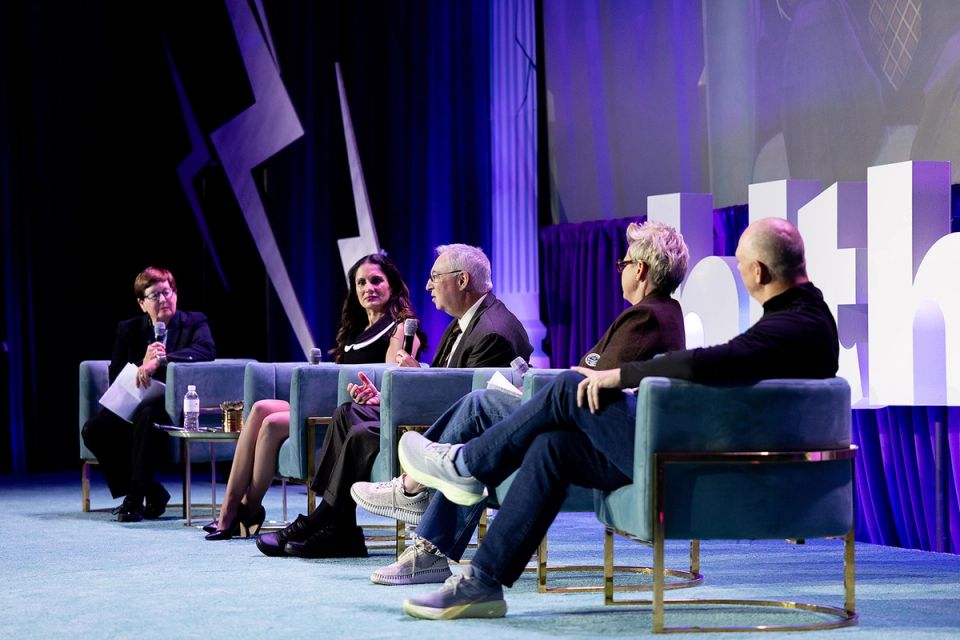
A practical note: the main-stage keynotes get clipped and summarized online within days. The reason to be in the building is the parallel insights programs, the floor conversations, and the curated 1:1 meetings, where you talk to the person actually running the program you care about. Plan your week around those, not just the headliners.
Programs, summits, and curated networking at HLTH
HLTH isn't a training-and-certification conference, so instead of labs and exams, the structured value sits in its programs and curated meetings. The ones to understand before you go:
- Market Connect. A curated 1:1 meeting program matching senior buyers with relevant solution providers. Approval is required, and qualifying participants can earn a $750 travel credit for completing 12 or more meetings. The application deadline is November 2, 2026.
- Investor Connect. The investor-side equivalent, pairing capital with companies. If you're raising or deploying, this is where the most useful conversations happen.
- Startup Pitch Competitions. Five pitch competitions run across the event, covering aging, health equity, women's health, AI, and the main HLTH USA pitch, which finishes on the main stage Wednesday morning. Worth watching even if you're not competing, to read where the category and the judges are headed.
- Wednesday Health Tech Summit. The Future, Future, Future of Health Tech Summit runs Wednesday morning alongside partner specialty workshops. It covers connected data, AI implementation, patient experience, and workforce well-being.
- Awards and showcases. The Digital Health Hub Awards, the Techquity for Health Awards, and an art gallery round out the programming.
If you're attending to do business rather than just learn, apply for Market Connect or Investor Connect early. Market Connect applications close November 2, matchmaking opens to buyers on October 21, and participants commit to at least eight meetings, held November 16-17.
Expo hall, sponsors, and partner events at HLTH
The HLTH exhibit floor is large: 950+ exhibitors and sponsors across Level 2 of the Venetian Expo, organized into the AI Zone and the topic pavilions described above. It's where you'll see the full vendor landscape in healthcare in one pass, from the largest platforms to seed-stage startups in the Startup Zone.
Walking that floor, you'll notice a pattern. Nearly every company there can show you a polished dashboard or a slick product demo. Far fewer have solved the unglamorous problem behind it: turning that same data into the recurring board decks, investor updates, and customer reports that have to go out every month and quarter, accurately, without a person rebuilding them by hand each time. That's the gap worth keeping in mind as you collect business cards. We'll get specific about it in the Rollstack section below.
Is HLTH USA 2026 worth it?
For most people whose work touches the business of healthcare innovation, yes, with a caveat: HLTH rewards people who go with a plan. It's big, it's expensive, and it's easy to wander a show floor for three days and come home with a tote bag and no outcomes.
The strongest case for attending isn't the keynotes, which get recapped everywhere within a week. It's the density of decision-makers and the curated meeting programs. One well-prepared week at HLTH can compress months of cold outreach into a few days of in-person conversations.
HLTH is most worth it if you are:
- Raising capital or deploying it, and want concentrated investor or founder access
- Selling into healthcare and can get into Market Connect with a real target list
- Setting strategy and need to benchmark where AI, care delivery, and policy are heading
- Building partnerships across the payer, provider, pharma, and digital-health lines
It may be less urgent if your team is very early-stage with no clear meeting targets, or if your interest is purely educational. In those cases the on-demand recordings included with registration may cover most of what you'd get from the main stage, and you can save the travel budget for a year when you have specific business to do.
HLTH USA 2026 pricing and registration
HLTH prices by attendee type, and some rates rise in steps as the event gets closer, up to a full rate. These were the rates on HLTH's registration page on October 5, 2026:
- Healthcare Clinicians: $1,500 (full rate $3,395). For actively practicing or employed clinical professionals.
- Startups: $1,500 (full rate $3,395). For companies founded less than four years ago that have raised under $8M. The startup rate is limited to two attendees per company.
- Government & Non-Profit: $1,500 (full rate $3,395). For government employees and 501(c)(3) organizations.
- Healthcare Provider, Payer & Employer Executives: $2,895 (full rate $3,395).
- Investors: $2,895 (full rate $3,395). For VCs, private equity, and angel investors.
- Solution Providers & Vendors: $3,595 (full rate $3,995).
Two passes can be free with approval:
- Market Connect: free with an accepted application (a $3,395 value), with a $750 travel credit for completing 12+ meetings. Application deadline November 2, 2026.
- Media & Influencers: free with an accepted application (a $3,995 value), for accredited journalists and healthcare content creators.
The registration page counts down to the next price increase on October 9, 2026, and doesn't say what the new rates will be. Confirm the live rate on the official HLTH registration page before you book.
One thing to know before you buy: passes are non-refundable. You can transfer a pass to another person by emailing info@hlth.com before November 6, 2026. The new attendee has to qualify for the same ticket type or pay the price difference. Badge sharing is prohibited and can result in a permanent ban, so register the people who are actually attending.
HLTH USA 2026 promo code or discount code
HLTH's registration page doesn't list a public promo code for HLTH USA 2026. The discounts are built into the passes. Clinicians, startups, and government and nonprofit attendees pay from $1,500 instead of the $3,395 full rate. Organizations registering five or more people get $300 to $350 off each ticket, depending on group size, though group discounts don't apply to the clinician, startup, government, or nonprofit passes. Market Connect and Media passes can be free with an accepted application. HLTH doesn't apply discounts retroactively, so ask about group pricing before anyone on your team registers.
Be cautious of any third party emailing you a "HLTH discount," especially around hotels. HLTH says Connections Housing is its only authorized housing vendor and that it hasn't authorized anyone else to contact attendees about rooms.
Hotels and travel for HLTH USA 2026
The official housing partner for HLTH 2026 is Connections Housing, which holds discounted room blocks at hotels near the Venetian. Book through the official portal at connectionstravel.app/HLTH26/start, or by phone at 702-329-9615 (Monday-Friday, 6am-3pm PST). The housing cancellation cutoff passed on September 21, 2026, so cancelling a Connections Housing booking now forfeits the one-night room and tax deposit and the processing fee. Each hotel also has its own cancellation policy. Book once your dates are firm.
Important: HLTH has stated that Connections Housing is the only authorized housing vendor. If another company emails or calls offering "HLTH room blocks," it's a poaching scam. Book only through the official link.
The most convenient place to stay is the Venetian or Palazzo towers, which are attached to the Expo, so you can walk to sessions without crossing the Strip. Nearby alternatives include:
- Wynn and Encore: a short walk north, upscale, quieter casino floors.
- Caesars Palace: central Strip, an easy rideshare to the venue.
- Resorts World: modern, directly across the Strip, often competitive rates.
A Las Vegas reality check: walking distances on the Strip are deceptive, and the Venetian itself is enormous. The walk from a Venetian guest room to the Expo halls can take 15 minutes indoors. Stay close, and budget more time than the map suggests.
For travel, fly into Harry Reid International Airport (LAS), about four miles from the venue and a 10-to-20-minute rideshare or taxi ride. HLTH suggests arriving Saturday, November 14 so you're settled for Sunday's opening sessions and Welcome Reception. Mid-November is a busy convention period in Las Vegas, so book flights and rooms early.
Practical tips for HLTH USA attendees
- Apply for Market Connect or Investor Connect early. The curated meetings are the highest-value part of the week, the slots are finite, and applications close November 2. If you want the $750 travel credit, plan to complete 12+ meetings.
- Build a target list before you arrive. HLTH is too big to wander productively. Decide who you need to meet and which sessions matter, then route your days around the floor zones (AI Zone, pavilions, Startup Zone).
- Book your hotel through Connections Housing only. It's the sole authorized vendor, and the room block beats the rack rate during convention week.
- Stay close to the Venetian. The Expo is huge and the Strip is deceptive. Proximity saves you an hour a day.
- Pick up your badge early. Registration and badge pickup opens Sunday, November 15, from 8:30am to 7pm in the Venetian Ballroom, then runs 7am to about 5pm Monday and Tuesday and 7:45am to noon Wednesday. Every pass includes fast-track badge pickup.
- Wear comfortable shoes and bring a layer. You'll walk miles inside one building, and Vegas convention halls run cold regardless of the desert outside.
- Pace your evenings. The Welcome Reception at Zouk on Sunday, the Women @ HLTH reception on Monday, and Industry Night at Soleia on Tuesday are all worth it, but back-to-back late nights will cost you Tuesday's and Wednesday's conversations. Pick your nights.
- Use the app, not paper. The agenda and networking tools live in the event app; WiFi is included throughout.
- Take notes by problem, not by session. You'll come home to a team that wants the synthesis, not eight separate session recaps.
- Don't skip Wednesday. It's condensed (8am to noon), but the Health Tech Summit, the partner workshops, and the startup pitch finale pack a lot in before everyone flies out.
HLTH USA 2026 dress code
The official dress code is business or business casual. HLTH skews more polished than a developer or analytics conference: think blazers, smart separates, and brand-forward outfits, especially if you're representing a company on the floor or taking investor meetings. You won't be out of place in a sharp business-casual look.
The two non-negotiables hold regardless: shoes you can comfortably walk miles in, and a layer for the aggressive convention-hall air conditioning. Everything else is about how visible your role is during the week.
Where Rollstack fits for health-tech and digital-health teams
Most of the organizations at HLTH have invested in solid data infrastructure and a BI tool: Tableau, Power BI, Looker, or similar. The dashboards are good. The problem is the same one every growing health-tech company hits: the recurring reporting that leadership, boards, investors, and enterprise customers actually read is still assembled by hand, every month and every quarter.
That's where Rollstack fits, and it's worth being precise about scope. Rollstack automates the business and operational reporting layer for health-tech organizations: board decks, investor updates, executive operating reviews, partner and customer QBRs, and recurring customer-facing reports. It connects to whatever BI tool sits on top of your data and pushes live data into PowerPoint, Google Slides, Word, or Google Docs on a schedule. One template can generate many personalized versions, for example a tailored performance report for each enterprise customer or partner.
The common objection is reasonable: "our BI tool already exports to PowerPoint." Those exports are static. They don't refresh, don't schedule, don't distribute themselves, and don't scale to dozens of customer-specific decks. Rollstack handles the full recurring cycle, which is the part most teams still do manually. For enterprise and regulated buyers, Rollstack is SOC 2 Type II, HIPAA, and GDPR compliant, and content stays in your own drives.
For a concrete proof point: SoFi's finance team uses Rollstack to compress its review-cycle slide prep from 6 hours to 45 minutes. Same data, same decisions in the room, far less manual work in between. If you want the broader picture of how this sits in a modern stack, the report generation in the modern data stack write-up covers it.
You'll spend HLTH proving traction in conversations. Then you'll spend the next quarter proving it again, by hand, in slides. Rollstack connects your BI tool to the board decks, investor updates, and customer reports that have to go out on schedule, so the numbers reach the room without a manual rebuild every cycle. See it in action.
Livestream, virtual access, and on-demand sessions
HLTH USA is an in-person event, and HLTH hasn't announced a public livestream. Every registration includes on-demand access to session recordings after the event, through the event app and the HLTH Member platform.
So if you register and can't attend a session live, or you miss one because of a Market Connect meeting, you'll be able to watch it afterward. What doesn't translate to video is the reason most people go: the floor, the curated meetings, and the receptions. If your only goal is to hear the keynotes, the recordings may be enough. If you're there to do business, in-person is the whole point.
HLTH USA 2026 FAQ
When is HLTH 2026? HLTH USA 2026 runs November 15-18, 2026, Sunday through Wednesday.
When is HLTH 2027? HLTH USA 2027 runs October 17-20, 2027 in Las Vegas.
Where is HLTH 2026? The Venetian Expo, 3355 S Las Vegas Blvd, Las Vegas, Nevada. It's about four miles from Harry Reid International Airport, a 10-to-20-minute rideshare or taxi ride.
How much is HLTH 2026? It depends on your attendee type. Passes start at $1,500 for clinicians, startups, and government and nonprofit attendees. Executive, investor, and vendor passes cost more, and some rates rise as the event gets closer, up to full rates of $3,395 for most types and $3,995 for solution providers and vendors. Market Connect and Media passes can be free with an accepted application. Confirm the live rate on the official registration page.
Is there a promo code for HLTH 2026? HLTH's registration page doesn't list a public promo code. The built-in discounts are the lower-priced passes for clinicians, startups, and government and nonprofit attendees, group discounts for organizations registering five or more people, and the free Market Connect and Media passes available with approval.
Who should attend HLTH 2026? Digital-health founders and operators, payer/provider/employer executives, healthcare investors, pharma and life-sciences leaders, health IT and analytics teams, and vendors selling into healthcare. It's an industry and innovation event, not a clinical-education conference.
Who is speaking at HLTH 2026? Main-stage speakers include Arianna Huffington (Thrive Global), Ashley Alexander (OpenAI), Dr. Syed Mohiuddin (Anthropic), Dr. Myechia Minter-Jordan (AARP), Dr. Toyin Ajayi (Cityblock Health), and Will Ahmed (WHOOP). The full list is on the official speakers page.
Is HLTH 2026 worth it? For people doing business in healthcare innovation, usually yes, if you go with a plan. The value is the density of decision-makers and the curated meeting programs, not the keynotes (which get recapped online). It's less urgent if you're very early-stage with no meeting targets or attending purely to learn.
What is Market Connect at HLTH? A curated 1:1 meeting program matching senior buyers with relevant solution providers. It requires an accepted application (deadline November 2, 2026), and participants who complete 12+ meetings can earn a $750 travel credit.
Will HLTH 2026 be livestreamed? HLTH hasn't announced a public livestream. Every registration includes on-demand access to session recordings after the event, through the event app and the HLTH Member platform.
Are HLTH sessions available on demand? Yes. On-demand access to all in-person content and session recordings is included with registration and is available after the event through the HLTH Platform.
What should I wear to HLTH? Business or business casual. HLTH skews more polished than a tech conference, especially for people on the floor or in investor meetings. Bring comfortable shoes and a layer for the convention-hall air conditioning.
What hotels are near HLTH 2026? Book through HLTH's official housing partner, Connections Housing, the only authorized vendor. The most convenient stays are the Venetian and Palazzo towers attached to the Expo; nearby alternatives include Wynn, Encore, Caesars Palace, and Resorts World.
Can I transfer or refund my HLTH registration? Passes are non-refundable, but you can transfer yours to another person by emailing info@hlth.com before November 6, 2026. The new attendee has to qualify for the same ticket type or pay the price difference. Badge sharing is prohibited.
How does Rollstack fit with HLTH and health-tech reporting? Rollstack automates the recurring business reporting that health-tech and digital-health organizations build downstream of their BI tools: board decks, investor updates, operating reviews, and customer/partner reports. It connects Tableau, Power BI, Looker, and similar tools to PowerPoint, Google Slides, Word, and Google Docs that refresh on schedule. If your team is rebuilding the same decks every month, book a Rollstack demo.
Going to HLTH USA 2026? Have a productive week in Las Vegas. And if your team is spending its post-conference quarter rebuilding the same board and investor decks by hand, book a Rollstack demo and we'll show you how the slides update themselves.
Connects to the tools you already use
All integrations