


Automated Reporting Tools: What Are They?
Automated reporting tools are software solutions designed to enhance the process of data collection, analysis, and presentation giving businesses that use them a deep strategic advantage. These tools automatically generate reports based on predefined criteria, saving time and reducing the risk of human error. They cater to various needs, from self-service and visualization to business intelligence and product analytics.
Self-Service
Self-service reporting tools enable users to create and customize their reports without needing extensive technical knowledge. They empower non-technical users to generate insights and make data-driven decisions independently.
Visualization
Visualization tools focus on converting complex data into easy-to-understand visual formats like charts, graphs, and dashboards. They help users quickly grasp trends, patterns, and anomalies in their data.
Business Intelligence
Business intelligence (BI) tools integrate data from multiple sources to provide comprehensive insights into an organization's performance. They support strategic decision-making by offering in-depth analysis and reporting capabilities.
Product Analytics
Product analytics tools track and analyze data related to product usage, performance, and customer behavior. They help businesses optimize their products and enhance user experience.
Enterprise
Enterprise reporting tools are designed for large organizations with complex reporting needs. They offer robust features for data integration, scalability, and collaboration.
Financial
Financial reporting tools specialize in managing and analyzing financial data. They provide insights into financial performance, budgeting, forecasting, and compliance.
Dashboards
Dashboard tools consolidate data from various sources into a single, interactive interface. They offer real-time monitoring and reporting, making it easy to track key metrics and performance indicators.
Code-Based
Code-based reporting tools allow developers to create custom reports using programming languages. They offer flexibility and control over report design and functionality.
Report Generation (e.g., Rollstack)
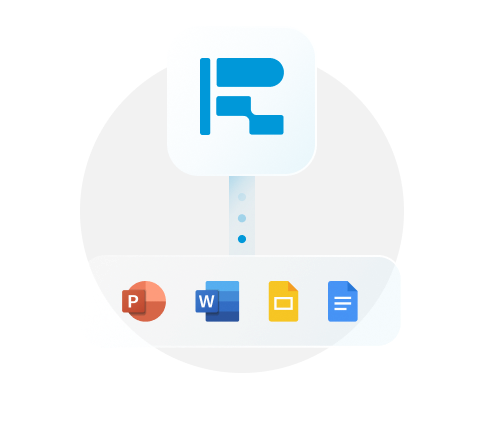
Report generation tools like Rollstack automate the creation and distribution of reports. They integrate with various data sources and presentation platforms, ensuring accurate and timely reporting.
Automated Report Tool Best Practices
Implementing automated reporting tools effectively requires adhering to best practices to ensure accuracy, consistency, and usability.
Goal Setting
Clearly define the goals of your reporting process. Understand what insights you need to drive decision-making and how the reports will support these objectives.
KPIs
Identify key performance indicators (KPIs) that align with your business objectives. Ensure that your automated reports track these KPIs accurately and consistently.
Establish Frequency
Determine the frequency of your reports. Whether it's daily, weekly, monthly, or quarterly, set a schedule that aligns with your decision-making cycles.
Automate
Leverage automation to minimize manual intervention. Automated data collection, processing, and report generation save time and reduce the risk of errors.
Align on Data Stack
Ensure that your reporting tools integrate seamlessly with your existing data stack. This alignment facilitates smooth data flow and enhances the accuracy of your reports.
Data Cleaning
Implement robust data cleaning practices to maintain data quality. Automated tools should include features to detect and correct inconsistencies in your data.
Data Governance
Establish data governance policies to ensure data integrity, security, and compliance. Automated reporting tools should support these policies and help maintain regulatory standards.
Report Automation Examples
Automated reporting tools can be used in various scenarios to support decision-making across different domains.
Client Reports
Generate detailed client reports to provide insights into project progress, performance, and outcomes. Automated tools ensure timely and accurate delivery of these reports.
Quarterly Business Reviews
Create comprehensive quarterly business reviews to evaluate organizational performance. Automated tools can compile data from multiple sources to present a holistic view.
Monthly Reports
Automate the creation of monthly reports to track performance metrics and operational data. These reports help identify trends and make timely adjustments.
Weekly Reports
Weekly reports offer a quick snapshot of key metrics and performance indicators. Automation ensures that these reports are consistently produced and delivered.
Healthcare
In healthcare, automated reporting tools can track patient outcomes, resource utilization, and compliance metrics. They support informed decision-making and improve patient care.
Operations
Operational reports provide insights into efficiency, productivity, and resource allocation. Automation helps maintain up-to-date reports for operational management.
Choosing the Right Tool
Selecting the right automated reporting tool involves considering various factors to ensure it meets your organization's needs.
Data Security and Compliance
Ensure that the tool complies with relevant data security and privacy regulations, such as HIPAA, GDPR, and SOC 2 Type II. Data security features like encryption and access controls are essential.
Ease of Use
Choose a tool with an intuitive interface that is easy to use for both technical and non-technical users. This reduces the learning curve and increases user adoption.
Scalability
The tool should be scalable to accommodate your growing data needs. Ensure it can handle increasing data volumes and user demands without compromising performance.
Customization
Look for customization options that allow you to tailor reports to your specific requirements. The ability to create custom templates, filters, and visualizations is crucial.
Data Integrations
Ensure that the tool integrates seamlessly with your existing data sources and systems. This facilitates smooth data flow and enhances the accuracy of your reports.
Time to Value
Consider the implementation time and the speed at which you can start generating valuable insights. Tools with quick setup and deployment offer faster returns on investment.
Business Impact
Evaluate the potential impact of the tool on your business operations. Choose a tool that can drive significant improvements in efficiency, accuracy, and decision-making.
Benefits of Automated Reporting and Report Generation
Automated reporting and report generation offer numerous benefits, including:
- Efficiency: Automation reduces the time and effort required to generate reports, freeing up resources for other tasks.
- Accuracy: Automated tools minimize human errors, ensuring more accurate and reliable reports.
- Consistency: Automation ensures that reports are produced consistently, maintaining standardization across the organization.
- Timeliness: Automated tools can generate and distribute reports in real-time or at scheduled intervals, ensuring timely access to information.
- Insights: Advanced analytics and visualization capabilities provide deeper insights into data, supporting informed decision-making.
- Scalability: Automated tools can handle large volumes of data and scale with your business needs.
Top 10 Report Automation Tools
1. Rollstack
Overview: Rollstack automates the creation and distribution of reports, integrating with various data sources and presentation platforms.
Features: Seamless integration, multiple filters, real-time updates, email distribution, no data storage.
Pros: High security, ease of use, customizable templates.
Cons: Limited to predefined integrations.
G2 Rating: #1 in quality of support and likelihood to recommend.
Ready to automate your reporting? Try Rollstack today or schedule a automated report demo.
2. Tableau
Overview: Tableau is a leading data visualization and BI tool that helps users create interactive and shareable dashboards.
Features: Drag-and-drop interface, data blending, real-time analytics.
Pros: User-friendly, powerful visualizations.
Cons: Can be expensive, steep learning curve.
G2 Rating: Highly rated for visualization capabilities.
3. Looker
Overview: Looker is a BI tool that connects directly to databases and offers powerful data exploration capabilities.
Features: Data modeling, real-time data access, integration with BigQuery.
Pros: Flexible, scalable.
Cons: Can be complex to set up, high cost.
G2 Rating: Highly rated for data modeling and exploration.
4. Power BI
Overview: Power BI is a Microsoft tool that provides robust data analytics and visualization capabilities.
Features: Integration with Microsoft products, AI-driven insights, custom visuals.
Pros: Affordable, integrates well with other Microsoft tools.
Cons: Limited customization options, performance issues with large datasets.
G2 Rating: Highly rated for ease of use and integration.
5. Metabase
Overview: Metabase is an open-source BI tool that offers simple and intuitive data analysis and visualization.
Features: SQL querying, data exploration, dashboard creation.
Pros: Free, easy to use.
Cons: Limited advanced features, less support.
G2 Rating: Highly rated for simplicity and ease of use.
6. Domo
Overview: Domo is a cloud-based BI platform that offers a wide range of data visualization and reporting tools.
Features: Real-time data integration, collaboration tools, mobile access.
Pros: Comprehensive, scalable.
Cons: Expensive, complex pricing model.
G2 Rating: Highly rated for mobile accessibility and collaboration.
7. Tableau AI, Salesforce Einstein
Overview: Salesforce Einstein provides AI-powered analytics and insights integrated with Salesforce CRM.
Features: Predictive analytics, natural language processing, data discovery.
Pros: Powerful AI capabilities, seamless Salesforce integration.
Cons: High cost, steep learning curve.
G2 Rating: Highly rated for AI and predictive analytics.
Report Automation AI
AI enhances automated reporting by offering predictive analytics, natural language processing, and advanced data insights. These capabilities help identify trends, predict outcomes, and generate more actionable reports. AI in report automation transforms raw data into actionable insights with minimal human intervention. By leveraging machine learning algorithms and natural language processing, AI-driven tools can analyze vast amounts of data, identify patterns, and generate comprehensive reports quickly. This capability not only saves time but also enhances the quality of the insights, enabling better decision-making.
Efficiency and Speed
One of the primary benefits of AI in report automation is the dramatic increase in efficiency and speed. AI-powered tools can process and analyze data much faster than human counterparts, delivering reports in real-time or on a scheduled basis. This timeliness is crucial for businesses that rely on up-to-date information to make strategic decisions.
Accuracy and Consistency
AI minimizes the risk of human error in data analysis and reporting. Automated tools ensure that reports are consistent and accurate, adhering to predefined standards and criteria. This reliability is essential for maintaining trust in the data and the decisions derived from it.
Advanced Analytics and Insights
AI-driven report automation goes beyond basic data aggregation. It employs advanced analytics to uncover hidden trends, predict future outcomes, and provide deeper insights. For instance, AI can detect anomalies in financial data, forecast sales trends, and analyze customer behavior patterns. These capabilities empower businesses to make proactive and informed decisions. AI-first companies like Rollstack are leading the charge in the developing future-proof AI business intelligence tools.
Report Automation for Decision Making
Automated reporting supports decision-making by providing timely, accurate, and relevant data. Examples include client reports, quarterly business reviews, and operational reports, each tailored to specific decision-making needs.
Report Automation Conclusion
Automated reporting tools are essential for modern businesses, offering efficiency, accuracy, and scalability. By choosing the right tool and following best practices, organizations can transform their reporting processes and make more informed decisions. Rollstack, along with other leading tools, provides a robust solution for automated report generation, ensuring data security and compliance while delivering valuable insights.
Ready to automate your reporting? Schedule a automated report demo of Rollstack today!

Ready to close the gap between your BI tool and the board deck?
See how finance teams automate the full delivery layer: from governed BI data to formatted, distributed board materials, without manual exports.


